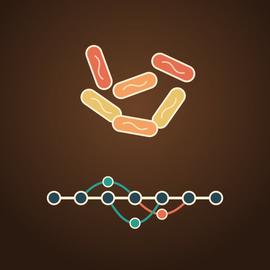
Genome Mining of Novel Enzymes and Bioactives from Termite Gut Microbes
DIPI SRG Project
Project Description
Termites decompose lignocellulose, the most abundant organic material on Earth, thanks to the enzymes of the diverse microbes living in their gut. These microbes interact closely with each other and with their host, likely through many bioactive compounds involved in communication, host signaling, and competition.
This project extends our existing collection of termite gut bacterial isolates by sequencing and analysing their genomes. We look for novel genes and pathways involved in lignocellulose degradation and bioactive compound production, and combine them with public datasets to find enzymes and bioactives with applications in biotechnology and medicine.
Pangenome Analysis of Bacillus velezensis BSR3
One of our sequenced isolates, Bacillus velezensis BSR3, shows high amylolytic activity. B. velezensis is also widely studied as a plant growth-promoting rhizobacterium (PGPR). We build a partitioned pangenome graph from more than 500 public B. velezensis genomes to pinpoint how BSR3 differs from other strains and to prioritize its unique enzymes and biosynthetic gene clusters.
Approach
- Large-scale genome mining of biosynthetic gene clusters with BGCFlow
- Building and exploring the B. velezensis partitioned pangenome graph
- Characterising carbohydrate-active enzymes (CAZymes) from the unique gene families in the pangenome, including machine-learning prediction of enzyme activity
Acknowledgements
This project is funded by the Indonesian Science Fund (DIPI) Small Research Grant 2024, in collaboration with the Universitas Gadjah Mada iGEM community.



Team Members

Matin Nuhamunada
Assistant Professor

Afra Majida Hariono
Research Assistant

Engki Nandatama
Research Assistant

Caitlyn Winata
Undergraduate Student

Nauval R. Raysendria
Undergraduate Student
Assyfa Atha
Undergraduate Student
Farrel A. Marsetyo
Undergraduate Student

Muhammad Ridwan A.
Undergraduate Student

Ruth Grace Sophie
Undergraduate Student